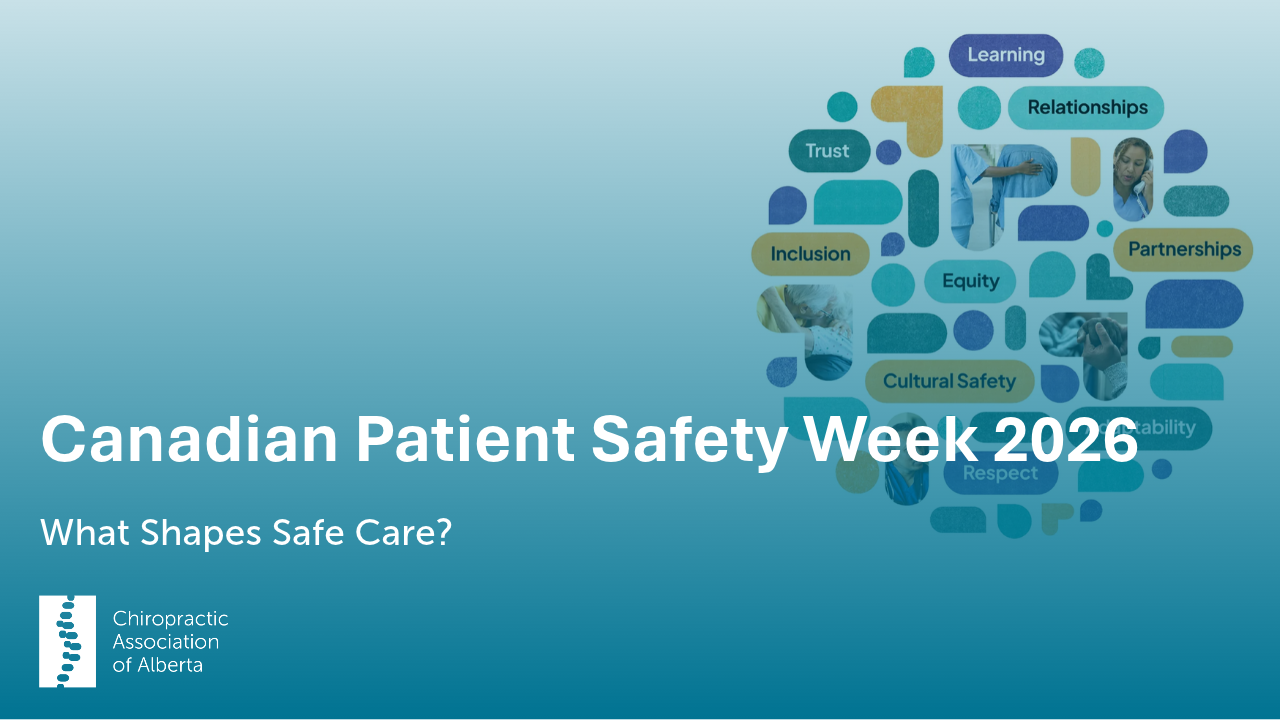
Canadian Patient Safety Week 2026: What Shapes Safe Care?
Canadian Patient Safety Week, led by Healthcare Excellence Canada, is an opportunity to reflect on the many factors that contribute to safe, high-quality care. Patient safety is not created through a singly policy, program, or clinical decision. It is shaped by everyday interactions, communication, learning, and systems that support both patients and healthcare providers.
This year’s theme, What Shapes Safer Care?, invites healthcare professionals to consider how individual actions, team processes, patient experiences, and continuous improvement efforts all contribute to safer care across healthcare settings. For chiropractors, CPSW offers an opportunity to reflect on how patient safety is supported in daily practice and identify practical ways to strengthen it.
Safety Begins with Listening
One of the most important contributors to patient safety is understanding the needs, concerns, and experiences of the person receiving care.
When patients feel comfortable sharing concerns, asking questions, and discussing their goals, healthcare providers are better positioned to make informed clinical decisions and provide care that aligns with a patient’s needs and expectations. Open communication can help identify misunderstandings, support informed consent, and create opportunities to address concerns.
In chiropractic practice, creating space for these conversations does not require significant changes. A simple question such as, “Is there anything about your experience or concerns that you would like us to understand?” can provide valuable insight and help support patient-centred care.
Another way to learn from patient experience is through Care Opinion Canada, a secure online platform that allows patients to share feedback and stories about their healthcare experiences. As part of CAA membership benefits, members can register for the platform at no cost. Patient stories can help clinics identify what is working well, recognize opportunities for improvement, and better understand how care is experienced from the patient’s perspective.
Teamwork Strengthens Patient Safety
While patient safety is often associated with direct patient care, it is also influenced by how healthcare teams work together.
Clear communication, effective information sharing, and an environment where team members feel comfortable asking questions or raising concerns all contribute to safe care experiences. Whether working in a solo practice or a multidisciplinary clinic, strong teamwork supports consistency, reduces the risk of misunderstandings, and support coordinated patient care.
This year's CPSW resources encourage healthcare teams to explore how different perspectives shape understanding of patient safety. Healthcare Excellence Canada's What Shapes Safer Care? discussion activity is designed to help organizations start meaningful conversations about safety, identify common themes, and learn from one another's experiences.
The value of these conversations was also reflected in responses from recipients of the Chiropractic Association of Alberta's 2026 Patient Safety Award. When asked what patient safety means to them, recipients highlighted themes such as listening carefully, understanding each patient's individual needs, communicating clearly, and helping patients make informed decisions about their care.
Taking time to discuss these topics during team meetings can help strengthen a shared commitment to safety and quality improvement within the clinic setting.
READ: Learn more about the 2026 Patient Safety Award Recipients
Learning from Incidents and Near Misses
A strong safety culture recognizes that incidents, near misses, and potential risks can provide valuable learning opportunities.
Rather than focusing solely on outcomes, safety-focused organizations examine contributing factors, identify patterns, and look for opportunities to improve systems and processes. These insights can help reduce future risks and support ongoing quality improvement.
The principles of Just Culture support this approach by encouraging healthcare professionals to move beyond blame and instead focus on understanding what happened, why it happened, and what can be learned. Reflection and learning are essential components of a culture that prioritizes patient safety while supporting professional accountability.
For Alberta chiropractors, the Chiropractic Patient Incident Reporting and Learning System (CPiRLS) supports this commitment to shared learning. CPiRLS provides a confidential reporting and learning system where members can report incidents, near misses, and potential risks. Information gathered through reporting can help identify trends, inform future improvements, and contribute to a broader understanding of patient safety across the profession.
By sharing experiences and lessons learned, chiropractors contribute to continuous improvement efforts that extend beyond individual practices and benefit the profession as a whole.
Patient Safety is an Ongoing Commitment
Canadian Patient Safety Week provides an important opportunity to reflect on safety within everyday practice.
Patient safety is shaped by countless interactions and decisions in everyday practice. Every time a chiropractor takes the time to listen, clarify information, collaborate with colleagues, seek feedback, or learn from experience, they contribute to a safer healthcare system.
As you reflect on this year’s theme, What Shapes Safer Care?, consider one action you can carry forward into your practice.
By fostering a Just Culture and continuous learning, Alberta chiropractors can continue to strengthen patient safety and help ensure patients receive safe, high-quality care.
Learn More
Healthcare Excellence Canada’s Canadian Patient Safety Week campaign offers resources, activities, patient stories, and learning opportunities to support reflective discussions about patient safety in healthcare settings.
Members may also wish to explore Healthcare Excellence Canada's Foundations of Healthcare Excellence learning series, which includes self-paced modules on patient safety, cultural safety, health equity, and creating environments that support meaningful engagement.
Additional resources:
- Canadian Patient Safety Week
- Foundations of Healthcare Excellence
- CPiRLS resources
- Care Opinion Canada
As Canadian Patient Safety Week concludes, consider one question: What is one action you will make time for in your practice next week to support safer care?
